Insights
Heavy Backpacks Are Hurting Tallahassee Students' Spines, Here's the Fix

Watch a student walk from class to class at FSU, TCC, or any Tallahassee high school. Most carry backpacks that ride low off one shoulder, bow their posture forward, and add 20 to 30 pounds of compressive load to a spine that is still developing or just starting to show the wear of early adulthood.
Back pain used to be considered a condition of middle age. It no longer is. Research consistently shows that adolescents and young adults report back pain at rates approaching those of working adults, and the backpack is one of the most significant modifiable contributors to that trend.
At University Physical Medicine, we see Tallahassee students, middle school through college, with postural back pain, cervical strain, and early disc loading patterns that trace directly to how they carry their academic load. Most cases are preventable. Many are reversible with the right intervention at the right time. Here is what students, parents, and coaches need to understand.
What the Research Says About Backpack Load and Spine Health
The American Chiropractic Association recommends that backpack weight stay at or below 10 percent of the student's body weight. That threshold is not arbitrary, it reflects the load level above which measurable postural compensation begins. A student weighing 130 pounds should carry no more than 13 pounds. Most students carry far more than that, and many carry it wrong.
Studies published in peer-reviewed spine and pediatric journals document that backpack loads exceeding 15 percent of body weight produce immediate forward trunk lean, shoulder asymmetry, and altered lumbar curvature. Carry that load five days per week across months and academic years, and the cumulative effect on spinal structure becomes clinically significant.
According to data referenced by the American Academy of Pediatrics, approximately 14,000 children are treated for backpack-related injuries annually in the United States. That number captures acute incidents. It does not capture the far more common pattern of slow-developing postural strain that accumulates quietly until pain brings a student into a clinical office.
Tallahassee's student population compounds this problem. FSU and TCC students often walk longer campus distances than students at smaller institutions. High school students along the Ocala Road corridor navigate multi-building campuses carrying loads that would challenge adult construction workers. The biomechanical exposure is real and sustained.
Why Students Are Especially Vulnerable
The adolescent and young adult spine is structurally different from a fully mature adult spine in ways that make it more susceptible to load-related injury, not more resilient.
1. Skeletal Immaturity
Bone structure in the spine does not fully mature until the early to mid-20s. The ring apophyses, the growth plates at the edges of each vertebral body, are active into late adolescence. Sustained compressive and bending loads applied to these structures during periods of growth affect how the vertebrae develop and how the intervertebral discs form their long-term architecture. A student who carries excessive backpack weight from age 12 through 18 does not simply experience six years of discomfort. Those six years may influence the disc health they carry into their 30s and 40s.
2. Postural Immaturity and Screen Time
Most students arrive at the backpack problem already carrying a compounding postural challenge: hours per day of forward head posture at screens, tablets, and phones. Forward head posture adds approximately 10 pounds of effective load to the cervical spine per inch of head translation. A student whose head sits 3 inches forward of neutral, which is common and increasingly normal, already loads the cervical spine with the equivalent of carrying a bowling ball on their neck before the backpack goes on. Add the pack, and the cumulative spinal load exceeds what many adults experience in physically demanding jobs.
3. Asymmetric Loading Habits
Single-shoulder backpack carrying is the default posture for most students, it is simply easier to sling a strap over one shoulder than to clip both. That convenience distributes load asymmetrically across the spine. The shoulder and thoracic region on the loaded side compress. The opposite side stretches. The lumbar spine rotates to compensate. Do this daily for a school year and the cumulative effect on spinal alignment is measurable, and often visible to a trained clinician before it becomes painful to the student.
Conditions That Develop From Chronic Backpack Strain
Most backpack-related spinal problems do not produce dramatic acute injuries. They build gradually, which is exactly why they go unrecognized until the pain becomes impossible to ignore.
ConditionHow Backpack Load ContributesCervical strain and neck painForward head posture under load compresses C4-C7 facets and strains posterior cervical musclesThoracic postural kyphosisSustained forward flexion under pack weight rounds the upper back and weakens thoracic extensorsLumbar disc loadingCompressive load plus forward lean increases intradiscal pressure at L4-L5 and L5-S1Shoulder impingementStrap pressure on the trapezius and supraspinatus alters shoulder mechanics over timeScoliosis progressionAsymmetric single-shoulder loading may accelerate curvature in students with existing mild scoliosisHeadaches and cervicogenic patternsUpper cervical loading refers pain into the head via trigeminocervical pathways
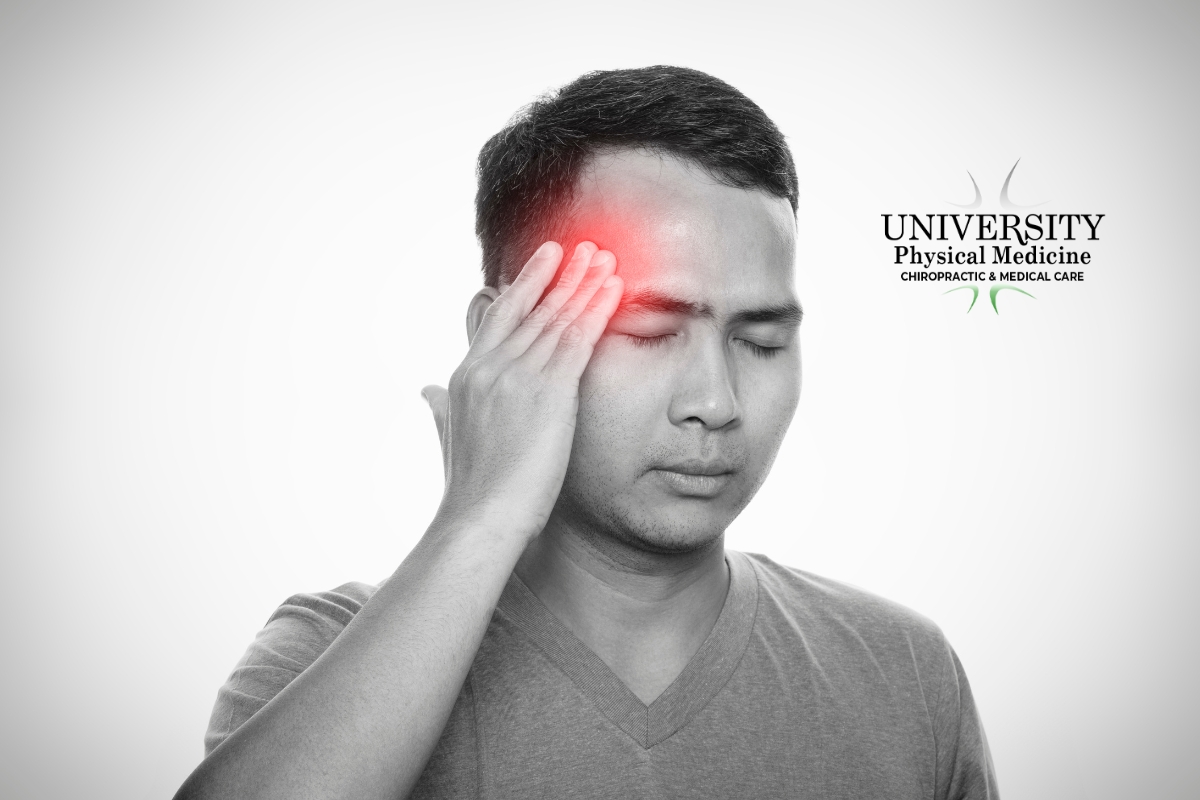
The last entry in that table deserves special attention. Students who carry heavy, asymmetric backpack loads and report frequent headaches, particularly tension-type or cervicogenic headaches that worsen during the school week and ease on weekends, often show a cervical postural pattern on examination that explains the headache pattern. The backpack and the headaches share the same structural source.
Warning Signs Parents and Students Should Recognize
Take These Symptoms Seriously, Do Not Wait for Them to Resolve on Their Own
> - Back or neck pain that appears consistently on school days and improves on weekends or breaks, this cyclical pattern points directly to a load-related cause
- Visible shoulder asymmetry, one shoulder sitting noticeably higher or more forward than the other when standing at rest
- A forward head posture that persists even when the backpack is off, structural compensation has begun
- Tingling or numbness in the arms or hands, which may indicate nerve root involvement at the cervical level
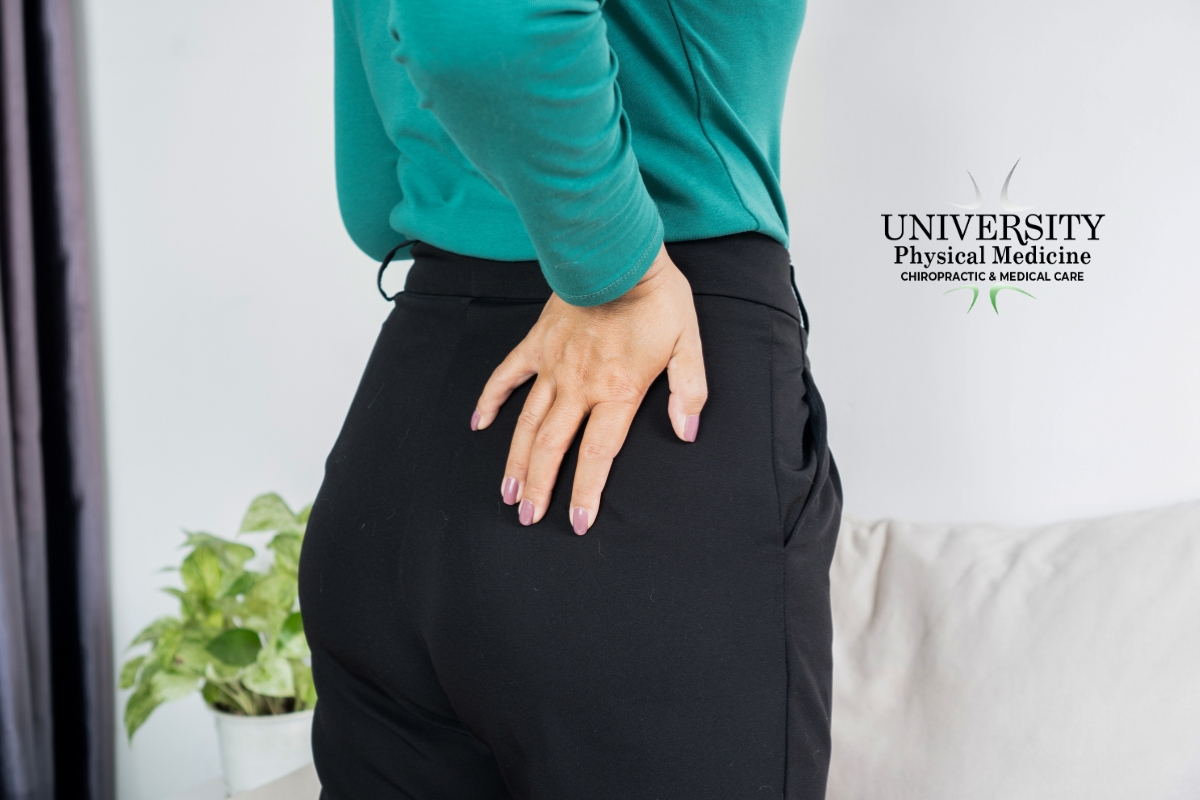
- Sciatica symptoms, shooting pain, numbness, or weakness running into the buttock or down the leg, in a student who carries a heavy backpack and sits for extended periods
- Frequent headaches during the school week that ease on weekends or holidays
- Complaints of "always being tired" after school that co-exist with poor posture and back discomfort
Waiting for these symptoms to resolve on their own during school breaks and then recur when the pack goes back on is not a management strategy. It is a pattern of chronic cyclical strain that produces cumulative structural change. Evaluation and early intervention interrupt that cycle.
The Correct Backpack Fit and Loading Strategy
A properly fitted, properly loaded backpack does not eliminate the compressive load on the spine, but it distributes that load symmetrically and positions it close to the body's center of gravity, which dramatically reduces the strain it produces.
Fit
- The pack should sit 2 inches below the shoulders and no lower than 4 inches below the waistline. A pack that rides into the lower back or off the buttocks forces severe forward lean.
- Both shoulder straps must be worn. A single-strap carry changes everything about how load distributes through the spine. No exceptions.
- Padded, wide straps reduce the local pressure on the trapezius and supraspinatus. Thin straps concentrate load into a narrow band and increase impingement risk.
- A sternum strap and hip belt, if the pack supports them, shift a portion of the load from the shoulders to the stronger skeletal structures of the chest and pelvis. They are not optional accessories for high-load students.
Loading
- Heaviest items go closest to the back, not in the front pockets. Distributing weight anteriorly pulls the student forward into flexion under load.
- Aim for 10 percent or less of body weight as total pack weight. Weigh the pack on a bathroom scale if there is any doubt.
- Leave unnecessary items at home or at school. Many students carry every textbook every day out of convenience. The spine pays the difference.
- Rolling backpacks and locker use are not just for students with existing pain, they are legitimate strategies for any student who exceeds the weight threshold.
When to Bring a Student to University Physical Medicine
Proper fit and loading strategy help prevent new problems and reduce ongoing strain. They do not correct structural changes that have already developed. When a student's back pain persists after load correction, or when postural changes are visible at rest, a clinical evaluation identifies what has developed and what treatment the spine needs.
What the Evaluation Includes
Dr. Belletto performs postural analysis, segmental cervical and lumbar mobility testing, and a neurological screen at the initial visit. For students specifically, the evaluation also assesses thoracic mobility and scapular function, areas that heavy pack loads consistently restrict. Where existing postural kyphosis or cervical forward translation has developed, the findings guide a treatment plan rather than generic stretching advice.
What Treatment Looks Like for Students
Most students with backpack-related spinal strain respond well to a combination of targeted spinal manipulation, thoracic extension mobilization, cervical manipulation, and postural rehabilitation exercises. The rehabilitation component matters specifically for students because the provocative load, the backpack, continues five days per week throughout the school year. Building spinal stability alongside manual treatment extends the improvement between sessions and reduces recurrence during high-load periods like finals week.
For students with persistent thoracic or cervical soft-tissue restriction that does not respond adequately to manipulation alone, shockwave therapy provides a tissue-level intervention that promotes remodeling in restricted paraspinal musculature. It is used selectively, not as a first-line treatment, but as an effective adjunct when manual treatment reaches its ceiling.
A Note for FSU and TCC Students
University students carry a unique burden that high school students do not: the combination of heavy backpacks, extended time seated in lectures and studying, limited physical activity during intense academic periods, and, frequently, sleeping positions that worsen cervical strain. University Physical Medicine sits one mile from FSU and TCC on Ocala Road. No referral is required. A complimentary new-patient consultation allows any student to discuss their symptoms with Dr. Belletto and determine whether a clinical evaluation is the right next step, without any obligation to proceed with treatment.
According to Florida Health, Leon County, musculoskeletal complaints are among the most prevalent health concerns in the 18-to-30 demographic served by Tallahassee's university community. Early intervention consistently outperforms delayed treatment in outcome quality and total treatment duration. The earlier the structural pattern is identified and addressed, the shorter the recovery path.
Frequently Asked Questions
How do I know if my child's backpack is causing their back pain?
The clearest signal is a cyclical pattern: pain that worsens during the school week and eases on weekends or breaks. Pain that improves every Friday and returns every Monday is describing its own cause. Additional markers include visible shoulder asymmetry, forward head posture that persists when the pack is off, and complaints that localize to the mid or lower back during or after school. Weigh the pack and compare it to 10 percent of the student's body weight, if it exceeds that threshold, it is contributing to the problem.
At what age should students start seeing a chiropractor for backpack-related strain?
There is no minimum age threshold for chiropractic evaluation. The relevant trigger is symptoms or visible postural change, not age. Elementary-age students who carry heavy packs and report back or neck pain warrant evaluation just as much as college students. Pediatric chiropractic evaluation uses age-appropriate techniques, the same manipulative forces used for adults are not applied to younger spines. University Physical Medicine evaluates students across age groups and adjusts the assessment and treatment approach to the individual patient.
Can chiropractic care straighten scoliosis caused by backpack use?
Scoliosis that develops during adolescence has a structural component that chiropractic care does not reverse. What chiropractic evaluation does is identify whether an observed curvature reflects true structural scoliosis or a functional postural pattern driven by asymmetric loading, the latter is responsive to treatment in ways that structural scoliosis is not. For students with identified scoliosis, chiropractic care manages pain, maintains mobility, and addresses the muscular imbalance that accompanies the curve. Referral to an orthopedic specialist is coordinated when the clinical picture warrants it.
Should a student stop using a backpack entirely while in treatment?
Complete pack avoidance is rarely practical, and it is not necessary for most students in treatment. The goals during treatment are to reduce the daily load to within recommended thresholds, correct the carry mechanics, and manage the structural changes that have accumulated. Students continue school during treatment. The treatment plan accounts for the ongoing exposure, which is precisely why the rehabilitation and stabilization component is built into the care plan from the beginning, not added as an afterthought.
How many visits does it typically take to resolve backpack-related back pain?
For students with mild to moderate postural strain and no neurological involvement, most see meaningful improvement within four to six weeks of consistent care. Students with more developed postural kyphosis, cervical forward head translation, or early disc involvement take longer, typically eight to twelve weeks. The examination findings at the first visit give a much clearer projection than any general guideline, which is why the consultation comes before any treatment commitment.
Get Your Student's Spine Evaluated Before the Problem Gets Worse
Back and neck pain in students does not resolve by finishing the school year. The structural changes that accumulate from heavy pack carrying stay with the spine into adulthood unless they are identified and addressed. University Physical Medicine offers a complimentary new-patient consultation for students and families, no referral, no obligation, and no insurance required to book. Chiropractic care for students in Tallahassee starts with understanding what is actually happening in the spine, not guessing.
Dr. Belletto sees new patients at 1224 Ocala Rd, one mile from FSU and TCC in west Tallahassee, with same-day appointments typically available.
Schedule a consultation today or call (850) 576-2129 to speak with our team directly.
University Physical Medicine | 1224 Ocala Rd, Tallahassee, FL 32304
Mon / Wed / Thu: 8:30 AM – 5:30 PM | Tue / Fri: 8:30 AM – 12:30 PM
Medical Disclaimer: This article is for general informational purposes only and does not constitute medical advice, diagnosis, or treatment. Back pain and spinal concerns in students have multiple potential causes that require individual clinical evaluation by a licensed healthcare provider. If a student experiences severe or worsening pain, pain with neurological symptoms such as numbness or weakness in the legs, or pain following a fall or impact, seek prompt medical evaluation. Always consult a qualified provider before beginning any treatment.