Insights
Why Headaches Keep Coming Back Even After Taking Pain Medication Daily
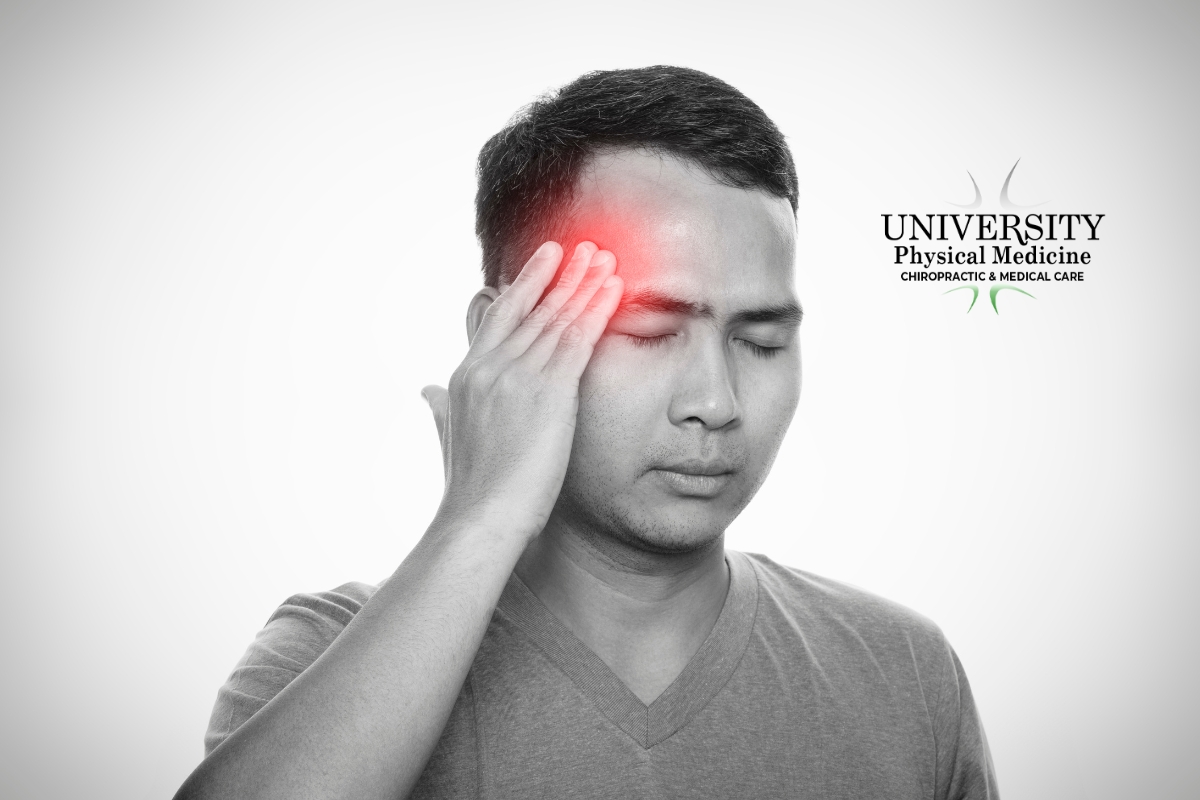
You sleep seven or eight hours. You wake up exhausted. Coffee helps for an hour. By early afternoon the fog rolls back in, thick, heavy, hard to think through. You tell yourself you need a better routine, more exercise, less stress. You have been telling yourself that for months.
Then the headaches arrive. Maybe they come and go through the day, a dull pressure that builds and releases without fully resolving. Maybe they follow a weekly cycle you cannot quite explain. You take something for them and they ease, then return.
Most patients in this pattern see multiple providers before anyone checks their hormones. They receive advice about sleep hygiene, stress management, and dietary changes, reasonable suggestions that never fully explain what is happening. At University Physical Medicine in Tallahassee, we see this presentation regularly: patients whose fatigue, brain fog, and recurrent headaches trace back to a hormonal picture no one has evaluated yet. That evaluation changes everything. Here is what you need to understand about the hormone-fatigue-headache connection, and why these two symptoms almost always share the same source.
Why This Fatigue Is Different From Simply Being Tired
Not all fatigue is the same. Sleep deprivation improves with rest. Dehydration resolves with fluids. Situational stress improves when the stressor lifts.
Hormone-related fatigue does not follow those patterns. Patients with hormone imbalance sleep adequate hours and still wake exhausted. They feel their best energy in brief windows, sometimes mid-morning, sometimes never, and spend the rest of the day running on a substrate that feels fundamentally depleted. Rest does not restore them the way it should.
The Endocrine Society notes that hormones regulate nearly every energy-production process in the body, from mitochondrial function and cellular metabolism to sleep architecture and cortisol rhythm. When estrogen, testosterone, thyroid hormones, or cortisol fall outside optimal ranges, the downstream effect on energy is pervasive. It is not one system that suffers, it is everything simultaneously, which is why patients often describe it as a general unraveling of how they used to function.
That description, 'I used to function better than this', is often the most diagnostically useful thing a patient says. It marks a departure from a previous baseline. Something changed. That change deserves investigation, not reassurance.
The Hormone-Headache Connection Most Providers Miss
Can a migraine come and go throughout the day? Yes, and when headaches follow a fluctuating pattern that does not respond cleanly to standard triggers, hormonal fluctuation is among the most under-evaluated explanations. The connection between hormones and headaches is biological, direct, and well-documented.
Estrogen and the Migraine Threshold
Estrogen exerts a direct modulatory effect on the trigeminal pain pathway, the neurological system that drives migraine. When estrogen levels are stable, the trigeminal system maintains a relatively high activation threshold: minor inputs do not trigger headache responses. When estrogen drops or fluctuates rapidly, as it does during perimenopause, at specific points in the menstrual cycle, or following a significant hormonal shift, that threshold falls. Inputs that previously passed unnoticed now trigger the full cascade of migraine or near-migraine response.
This is why some women describe headaches that move through the day, building, easing, returning, without fully clearing. They are experiencing a sensitized trigeminal system that oscillates around its activation threshold rather than falling below it. The headache pattern reflects the hormonal pattern beneath it.
According to the National Institute of Neurological Disorders and Stroke, women experience migraine at roughly three times the rate of men, a disparity researchers attribute largely to hormonal influences. Estrogen withdrawal specifically triggers migraine in susceptible individuals. The same mechanism operates at perimenopause, when estrogen levels become erratic rather than cyclically predictable.
Testosterone, Energy, and Headache in Both Sexes
Testosterone contributes to energy, cognitive clarity, and inflammatory regulation in both men and women. In men, testosterone decline through the 30s and 40s produces fatigue and brain fog that closely mirrors the energy complaints of female hormone imbalance. In women, testosterone plays a meaningful role in energy, libido, and mood, and its decline through perimenopause compounds the effects of estrogen fluctuation.
Low testosterone also correlates with increased inflammatory markers. Systemic low-grade inflammation sensitizes pain pathways throughout the body, including the trigeminal pathways involved in headache and migraine. Patients with significantly low testosterone and recurrent headaches often see improvement in both energy and headache frequency when testosterone is appropriately supplemented, because addressing the inflammatory and neuromodulatory picture changes the environment in which headaches arise.
Thyroid Dysfunction: The Most Commonly Missed Cause
Every patient presenting with unexplained fatigue and recurrent headaches at University Physical Medicine receives a full thyroid panel, not a TSH alone, but free T3, free T4, and thyroid antibodies. Hypothyroidism and Hashimoto's thyroiditis produce a fatigue and headache picture nearly identical to sex hormone imbalance, often coexist with hormone decline, and are frequently missed because TSH falls within the conventional normal range while free T3 or T4 does not.
Thyroid hormone regulates cellular energy production at the mitochondrial level. When T3 is insufficient, every cell in the body runs below its functional capacity. The brain experiences this as cognitive sluggishness, sensitivity to light and sound, and a vulnerability to headache that mirrors migraine without always meeting full migraine criteria. Correcting thyroid function, where appropriate, often produces the most dramatic energy improvement of any hormonal intervention.
What a Comprehensive Hormone Evaluation Includes at UPM
Celeste Lind, A.R.N.P. conducts hormone evaluations that go well beyond standard panels. The goal is a complete neuroendocrine picture, not just a testosterone or estradiol number in isolation.
What UPM's Hormone Panel Typically Covers
- Estradiol, progesterone, FSH, LH, primary sex hormones with attention to ratios and phase of cycle where applicable
- Total testosterone, free testosterone, SHBG, with sex hormone binding globulin to understand bioavailable vs. total levels
- Full thyroid panel: TSH, free T3, free T4, reverse T3, and thyroid antibodies (TPO and TgAb)
- Morning cortisol and DHEA-S, to assess adrenal function and the cortisol pattern underlying chronic fatigue
- Comprehensive metabolic panel, CBC, fasting glucose, and insulin, to rule out metabolic contributors to fatigue
- Vitamin D, B12, and magnesium, deficiencies in all three produce fatigue and headache patterns that overlap with hormone imbalance
- Inflammatory markers (hs-CRP), to quantify the systemic inflammatory load relevant to both energy and headache sensitivity
Lab results return within a few days of the initial evaluation. Celeste reviews findings with each patient in a follow-up appointment covering what each value means, how the values interact, what treatment options exist, and what to realistically expect from each approach. Patients who have spent years managing fatigue and headaches without a clear explanation often find this conversation, finally having a data-based picture of what drives their symptoms, to be a significant turning point.
Where Chiropractic Care Fits Into the Headache Picture
For patients with hormone-driven headaches, the hormonal environment sets the stage, but the cervical spine often determines whether a headache fires or not. Estrogen-sensitized trigeminal pathways amplify any incoming signal from the upper cervical spine. A patient whose C1-C2 joint restriction or suboccipital trigger points would otherwise produce mild stiffness may instead experience frequent headaches requiring medication when that input arrives into an already-sensitized nervous system.
University Physical Medicine addresses both layers simultaneously. Celeste manages the hormonal environment through evidence-informed HRT or TRT, while Dr. Belletto evaluates and treats the cervical structural contributors that amplify the hormonal signal. Patients treated through both channels, hormones and cervical spine, consistently report more complete improvement than those who address only one. Tallahassee patients seeking headache relief without medication often find that the combination eliminates or significantly reduces the need for over-the-counter and prescription headache management entirely.
How to Know Whether a Hormone Evaluation Is the Right Next Step
The right next step is a hormone evaluation when fatigue has persisted beyond three months, when rest does not reliably restore energy, when headaches appear on a regular or cyclical basis without a clear consistent trigger, and when previous medical evaluations have returned normal results that do not explain the patient's experience.
Normal results on standard panels do not rule out hormone imbalance. A TSH within normal range does not rule out thyroid dysfunction. A testosterone result within the bottom third of the reference range may be clinically significant for that individual even if it clears the lab's lower threshold. Reference ranges reflect population averages, not optimal individual function, and the gap between not abnormal and truly optimal is where most hormone-related fatigue and headache lives.
According to Florida Health, Leon County, chronic fatigue and headache disorders rank among the top reasons Tallahassee adults seek medical evaluation. Many of those patients have received symptomatic management without a hormonal workup. At UPM, the workup comes first.
Frequently Asked Questions
Can hormone imbalance really cause daily headaches?
Yes, and it does so through at least three distinct mechanisms: estrogen-driven trigeminal sensitization, testosterone-related increases in inflammatory load, and thyroid-related changes in intracranial pressure sensitivity and pain modulation. Daily headaches with a fluctuating quality, building and easing without fully resolving, are a characteristic presentation of hormonally driven headache, particularly in women during perimenopause or in men with significantly low testosterone. Lab work distinguishes hormonal from non-hormonal causes, which is why a panel comes before treatment at UPM.
Can a migraine come and go throughout the day when hormones are the cause?
This pattern, migraine-like pain that waxes and wanes through the day rather than arriving in a discrete attack, often reflects trigeminal pathway sensitization from fluctuating estrogen. The threshold for full migraine activation oscillates as hormone levels shift. Patients describe it as a headache that is always present at some level, with periods of intensification. This pattern is distinct from classic episodic migraine and often requires a different management approach, one that includes hormonal stabilization rather than abortive medication alone.
Is chiropractic care effective for headaches caused by hormones?
Chiropractic care for headaches in Tallahassee addresses the cervical structural component, joint restriction, suboccipital muscle tension, and upper cervical nerve irritation that contribute to headache generation. When hormone imbalance lowers the trigeminal threshold, cervical dysfunction that might otherwise produce only minor symptoms becomes a reliable headache trigger. Treating the cervical component reduces that trigger burden even before the hormonal environment is fully stabilized. Many patients find that chiropractic care and hormone evaluation together produce more complete headache relief without medication than either approach in isolation, which is exactly why both are available at UPM under one coordinated clinical relationship.
How long does it take to feel better after starting hormone therapy?
Energy improvements often begin within four to eight weeks of initiating appropriate hormone therapy, with sleep quality frequently the first metric to improve. Headache frequency typically reduces over a similar timeframe as the hormonal environment stabilizes and trigeminal threshold rises. Full optimization, including body composition changes, sustained cognitive clarity, and energy that holds through the afternoon, generally takes three to six months of consistent treatment and monitoring. Celeste sets individualized expectations at the initial consultation based on each patient's specific lab picture, symptom severity, and health history.
Do I need a referral to see Celeste Lind at UPM?
No referral is required. University Physical Medicine offers a complimentary new-patient consultation, no obligation and no insurance required to book your first visit. Celeste reviews your health history and symptom picture at the initial appointment, orders the appropriate lab panel, and schedules a follow-up review of results before any treatment begins. If you are also interested in cervical evaluation for headaches alongside your hormone workup, Dr. Belletto sees patients in the same practice. You can address both through one integrated clinical team in one location.